Celibacy is neither unnatural nor unbiblical. “Be fruitful and multiply” is not binding upon every individual; rather, it is a general precept for the human race. Otherwise, every unmarried man and woman of marrying age would be in a state of sin by remaining single, and Jesus and Paul would be guilty of advocating sin as well as committing it.
Another Protestant argument, related to the last, is that marriage is mandatory for Church leaders. For Paul says a bishop must be “the husband of one wife,” and “must manage his own household well, keeping his children submissive and respectful in every way; for if a man does not know how to manage his own household, how can he care for God’s Church?” (1 Tim. 3:2, 4–5). This means, they argue, that only a man who has demonstrably looked after a family is fit to care for God’s Church.
This interpretation leads to obvious absurdities. For one, if “the husband of one wife” really meant that a bishop had to be married, then by the same logic “keeping his children submissive and respectful in every way” would mean that he had to have children. Childless husbands (or even fathers of only one child, since Paul uses the plural) would not qualify. In fact, following this style of interpretation to its final absurdity, since Paul speaks of bishops meeting these requirements, it would even follow that an ordained bishop whose wife or children died would become unqualified for ministry! Clearly such excessive literalism must be rejected. The theory that Church leaders must be married also contradicts the obvious fact that Paul himself, an eminent Church leader, was single. Unless Paul was a hypocrite, he could hardly have imposed a requirement on bishops that he did not himself meet. Consider, too, the implications regarding Paul’s positive attitude toward celibacy in 1 Corinthians 7: the married have worldly anxieties and divided interests, yet only they are qualified to be bishops; whereas the unmarried have single-minded devotion to the Lord, yet are barred from ministry!
Clearly, the point of Paul’s requirement that a bishop be “the husband of one wife” is not that he must have one wife, but that he must have only one wife. Expressed conversely, Paul is saying that a bishop must not have unruly or undisciplined children (not that he must have children who are well behaved), and must not be married more than once (not that he must be married). ’ The truth is, it is precisely those who are uniquely “concerned about the affairs of the Lord” (1 Cor 7:32), those to whom it has been given to “renounce marriage for the sake of the kingdom” (Matt 19:12), who are ideally suited to follow in the footsteps of those who have “left everything” to follow Christ (Matt 19:27)—the calling of the clergy and consecrated religious (i.e., monks and nuns). An example of ministerial celibacy can also be seen in the Old Testament. The prophet Jeremiah, as part of his prophetic ministry, was forbidden to take a wife: “The word of the Lord came to me: ‘You shall not take a wife, nor shall you have sons or daughters in this place’” (Jer 16:1–2). Of course, this is different from Catholic priestly celibacy, which is not divinely ordained; yet the divine precedent still supports the legitimacy of the human institution.
Yet none of these passages give us an example of humanly mandated celibacy. Jeremiah’s celibacy was mandatory, but it was from the Lord. And even in 1 Corinthians 7 Paul qualifies his strong endorsement of celibacy by adding: “I say this for your own benefit, not to lay any restraint upon you, but to promote good order and to secure your undivided devotion to the Lord” (1 Cor 7:35). This brings us to Protestantism’s last line of attack: that, by requiring at least some of its clerics and its religious not to marry, the Catholic Church falls under Paul’s condemnation in 1 Timothy 4:3 against apostates who “forbid marriage.”
In fact, the Catholic Church forbids no one to marry. No one is required to take a vow of celibacy; those who do, do so voluntarily. They “renounce marriage” (Matt 19:12); no one forbids it to them. The Church simply elects candidates for the priesthood (or, in the Eastern rites, for the episcopacy) from among those who voluntarily renounce marriage. But is there scriptural precedent for this practice of restricting membership in a group to those who take a voluntary vow of celibacy? Yes. Paul, writing once again to Timothy, mentions an order of widows pledged not to remarry (1 Tim 5:9-16); in particular advising: “But refuse to enroll younger widows; for when they grow wanton against Christ they desire to marry, and so they incur condemnation for having violated their first pledge” (5:11–12). This “first pledge” broken by remarriage cannot refer to previous wedding vows, for Paul does not condemn widows for remarrying (cf. Rom 7:2-3). It can only refer to a vow not to remarry taken by widows enrolled in this group. In effect, they were an early form of women religious—New Testament nuns. The New Testament Church did contain orders with mandatory celibacy, just as the Catholic Church does today.
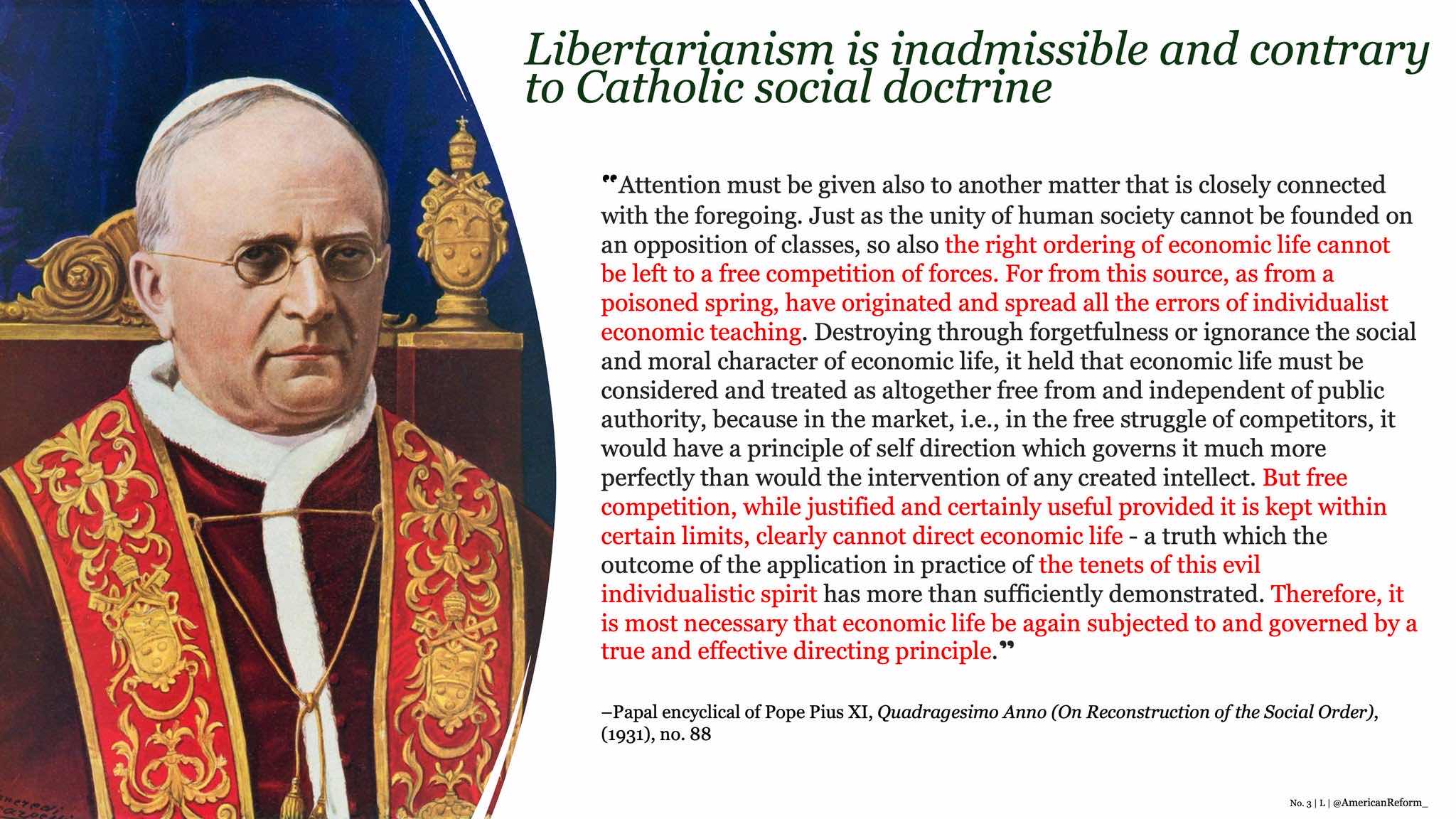
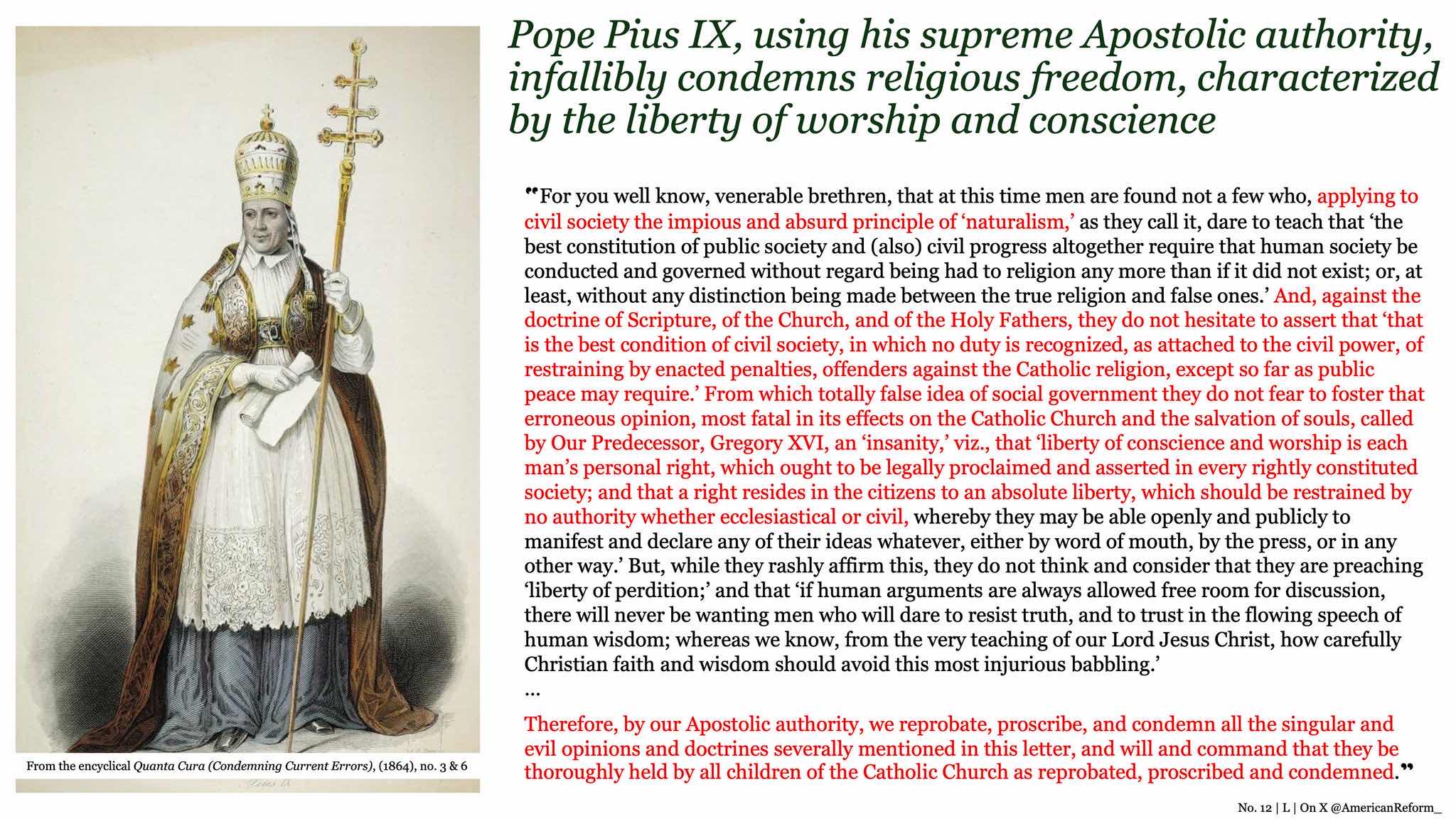
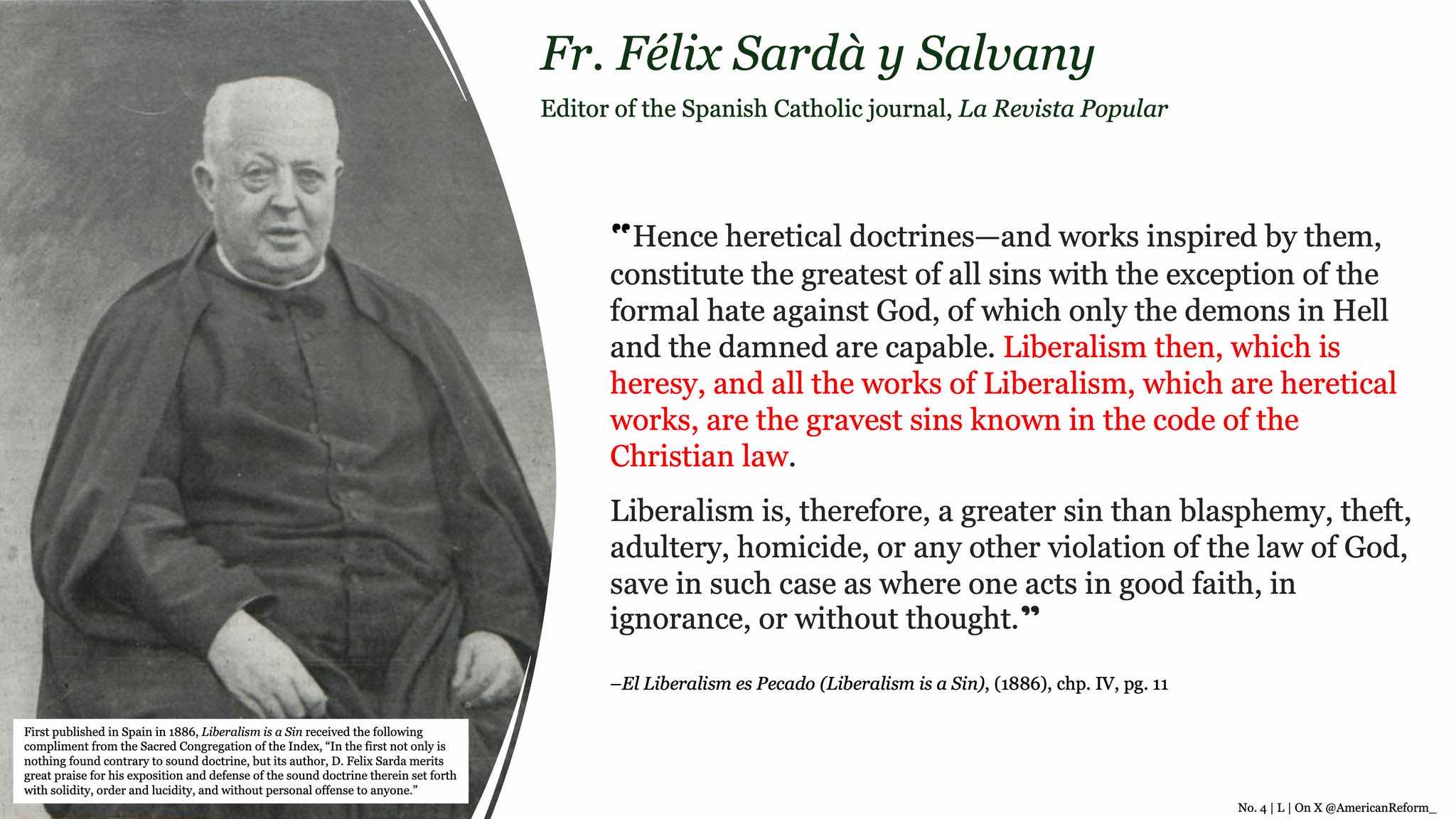
It is not lawful for the faithful to assist in any active manner, or to take part in the sacred rites of non-Catholics.
Polycarp regarded Marcion as the first-born of the Devil. Ignatius sees in heretics poisonous plants, or animals in human form. Justin and Tertullian condemn their errors as inspirations of the Evil One; Theophilus compares them to barren and rocky islands on which ships are wrecked; and Origen says, that as pirates place lights on cliffs to allure and destroy vessels in quest of refuge, so the Prince of this world lights the fires of false knowledge in order to destroy men. Jerome calls the congregations of the heretics synagogues of Satan (Ep. 123), and says their communion is to be avoided like that of vipers and scorpions. (Ep. 130)
"Thus, Venerable Brethren, it is clear why this Apostolic See has never allowed its subjects to take part in the assemblies of non-Catholics. There is but one way in which the unity of Christians may be fostered, and that is by furthering the return to the one true Church of Christ of those who are separated from it; for from that one true Church they have in the past fallen away."
The worship known as latria is that due to God alone; by it a man expresses his sense of service due to God who has full and chief dominion over all His creation. The worship known as dulia is that whereby we venerate and worship the Saints as created by God and most worthy to Him as His children and friends, as members of the Body of Christ, and as intercessors for us with God. But since the Blessed Virgin Mary, though but a creature, is, as being true Mother of God, joined, above all other creatures, to God in the most special manner, she is worshipped with a special cult called hyperdulia; see St. John Damascene, De Imaginibus, Oratio ii, 5; iii, 44
“We should fall into error were we to fashion an image of the invisible God; for what is not corporeal nor visible, nor circumscribed, nor endowed with a figure cannot possibly be depicted. Again, we should be acting wickedly were we to fancy that the images of men that we make are Gods, and were to offer them divine honour as to deities. None of these things can we ever permit.” (P.G., xciv, 1287.)
Should we not also venerate the relics of the Martyrs and of other Saints reigning with Christ?
“Keeping to the royal track, following the divinely inspired teaching of our Fathers and the traditions of the Catholic Church—for this tradition is, we know, the work of the Holy Spirit who dwells in her—we define with all care and diligence that there may be set up, in the same way as the figure of the precious and life-giving Cross, venerable and holy images, whether painted or in mosaic, or in any other material suitable to the churches of God; these may be depicted on vessels, vestments, walls or tablets, on houses or by the wayside; that is to say, images of our Lord God and Saviour Jesus Christ, also of our Lady the holy and unspotted Mother of God, of the glorious Angels, of all the Saints, and of good men. For so often as such imaginative representations are looked on, men who contemplate them feel their minds uplifted by such reminders of those who have preceded them, they feel a desire to imitate them, they are moved to kiss them and exhibit towards them due reverence; not of course real latria, for that concerns only the faith, and pertains solely to the Divine nature. Hence the practice of offering incense and candles before the image of the precious and life-giving Cross, before the Holy Gospels, and other sacred relics, in order to do them honour; and such practices are consecrated by ancient custom. For the honour paid to an image passes on to what it represents, so that he who adores an image adores the thing therein depicted. . . . We therefore command that if any have the audacity to hold or teach contrary opinions, devise novelties and go so far as to throw out things which have been destined for the churches, whether it be the Gospels, or images of the Cross, or pictures, or the relics of the holy Martyrs; if, in their crafty wickedness, they plot the subversion of practices based on the legitimate traditions of the Catholic Church; if they convert to secular uses the sacred vessels or famous monasteries; then we command that such, if they be bishops or clerics, be deposed; if monks or laymen, be excommunicated.”
Should not due honor and veneration be paid also to sacred images?
“Although we make images of good men we must not adore them as gods; but when we look at them we should feel roused to imitate them. And we make images of Christ so that our minds may be stirred up to the love of Him.” (P.G., lxix, 1268.)