There is one God — Deuteronomy 6:4; 1 Corinthians 8:4; Galatians 3:20; 1 Timothy 2:5
The Trinity consists of three Persons (Gen 1:1, Gen 1:26; Gen 3:22; Gen 11:7; Isaiah 6:8, Isaiah 48:16, Isaiah 61:1; Mt 3:16-17, Mt 28:19; 2 Cor 13:14). In Genesis 1:1, the Hebrew plural noun "Elohim" is used. In Genesis 1:26, 3:22, 11:7 and Isaiah 6:8, the plural pronoun for “us” is used. The word "Elohim" and the pronoun “us” are plural forms, definitely referring in the Hebrew language to more than two. While this is not an explicit argument for the Trinity, it does denote the aspect of plurality in God. The Hebrew word for "God," "Elohim," definitely allows for the Trinity. In Isaiah 48:16 and Isaiah 61:1, the Son is speaking while making reference to the Father and the Holy Spirit. Compare Isaiah 61:1 to Luke 4:14-19 to see that it is the Son speaking. Matthew 3:16-17 describes the event of Jesus’ baptism. Seen in this passage is God the Holy Spirit descending on God the Son while God the Father proclaims His pleasure in the Son. Matthew 28:19 and 2 Corinthians 13:14 are other examples of passages that present three distinct Persons in the Trinity.
The members of the Trinity are distinguished one from another in various passages. In the Old Testament, “LORD” is distinguished from “Lord” (Genesis 19:24; Hosea 1:4). The LORD has a Son (Psalm 2:7-12; Proverbs 30:2-4). The Spirit is distinguished from the “LORD” (Numbers 27:18) and from “God” (Psalm 51:10-12). God the Son is distinguished from God the Father (Psalm 45:6-7; Hebrews 1:8-9). In the New Testament, Jesus speaks to the Father about sending a Helper, the Holy Spirit (John 14:16-17). This shows that Jesus did not consider Himself to be the Father or the Holy Spirit. Consider also the other instances when Jesus speaks to the Father. Was He speaking to Himself? No. He spoke to another Person in the Trinity—the Father. Each member of the Trinity is God. The Father is God (John 6:27; Romans 1:7; 1 Peter 1:2). The Son is God (John 1:1, John 1:14; Romans 9:5; Colossians 2:9; Hebrews 1:8; 1 John 5:20). The Holy Spirit is God (Acts 5:3-4; 1 Corinthians 3:16).
The post-exilic Levites speak of the Spirit of God as being sent by God and speaking for God: “You also gave Your good Spirit to instruct them” (Nehemiah 9:20); and “For many years you were patient with them. By your Spirit you warned them through your prophets” (Nehemiah 9:30). Both verses seem to make a distinction between God and another personality called the Spirit of God. See also Isaiah 48:16 and Isaiah 63:10. Most of the time, God speaks of Himself using singular pronouns (e.g., Exodus 33:19; Hosea 11:9); at other times, He uses plural pronouns: “Then God said, ‘Let us make mankind in our image, in our likeness’” (Genesis 1:26, emphasis added). “And the LORD God said, ‘The man has now become like one of us, knowing good and evil’” (Genesis 3:22, emphasis added). As sinful humanity was erecting the tower of Babel, God said, “Come, let Us go down and confuse their language” (Genesis 11:7 BSB). In Isaiah 6:8, God refers to Himself in both singular and plural terms: “Then I heard the voice of the Lord saying, ‘Whom shall I send? And who will go for us?’” (emphasis added). We could assume that, in each of the above passages, God is simply using the majestic plural to emphasize His power and greatness. Or we could also assume that there’s something more going on—viz., that these statements hint at discrete personalities existing as a unified whole.
Here, the common error outlined above arises. It is VERY important to note that there is a STRONG difference between the “possession of a rational nature” and adding “consciousness/will/intellectual activity” as a note of personhood. The person is the ego which is the possessor and principle of such intellectual activity and not the intellectual activity itself. A natural example will suffice to understand the problem present with the confusion. For, let’s consider the case of a newly conceived child, such ought to be regarded by all as a “person” (only the defenders of infanticide differ in this regard). Yet, all agree that such is devoid of consciousness. By what grounds can he be referred to as a “person?” He has not yet reached the age of reason. With our definition of “person” he certainly can be referred to as a “person,” for he is a possessor of a soul which has rational faculties and can be said to be the principle of a rational nature, and, in a real sense, a possessor of rational acts in habitu, non in usu (in habit, not in use), from which will arise self-consciousness and volitional activity in actu (in actuality). The person is that root of the operation of self-consciousness and will, not the self-consciousness and will itself. This example of an error clears up the true relationship between nature and person, thus clarifying Catholic Trinitarian/Christological thought. For, the person is a possessor of the nature. This is self evident in our language about personality, for, we do not say that “I am a human nature,” but, “I have a human nature.” The “I” (person) possesses human nature. The person operates through the nature and is the principle of operation in the nature. Thus, the operations of the nature (including will and intellection) is not the person, but is referred to the person as its subject. Thus, the operations of the Divinity and Humanity of Christ are referred to the person of the Son as its subject and principle, while yet, there are two wills, intellections, etc. Further, there is one will of the Trinity, yet such can be predicated to three subjects, the Father, Son, and Holy Ghost.
Objections:
Obj. 1: It would seem that the definition of person given by Boethius (De Duab. Nat.) is insufficient—that is, "a person is an individual substance of a rational nature." For nothing singular can be subject to definition. But "person" signifies something singular. Therefore person is improperly defined.
Obj. 2: Further, substance as placed above in the definition of person, is either first substance, or second substance. If it is the former, the word "individual" is superfluous, because first substance is individual substance; if it stands for second substance, the word "individual" is false, for there is contradiction of terms; since second substances are the "genera" or "species." Therefore this definition is incorrect.
Obj. 3: Further, an intentional term must not be included in the definition of a thing. For to define a man as "a species of animal" would not be a correct definition; since man is the name of a thing, and "species" is a name of an intention. Therefore, since person is the name of a thing (for it signifies a substance of a rational nature), the word "individual" which is an intentional name comes improperly into the definition.
Obj. 4: Further, "Nature is the principle of motion and rest, in those things in which it is essentially, and not accidentally," as Aristotle says (Phys. ii). But person exists in things immovable, as in God, and in the angels. Therefore the word "nature" ought not to enter into the definition of person, but the word should rather be "essence."
Obj. 5: Further, the separated soul is an individual substance of the rational nature; but it is not a person. Therefore person is not properly defined as above.
Answers to Objections:
Reply to Objection 1: Although this or that singular may not be definable, yet what belongs to the general idea of singularity can be defined; and so the Philosopher (De Praedic., cap. De substantia) gives a definition of first substance; and in this way Boethius defines person.
Reply to Objection 2: In the opinion of some, the term "substance" in the definition of person stands for first substance, which is the hypostasis; nor is the term "individual" superfluously added, forasmuch as by the name of hypostasis or first substance the idea of universality and of part is excluded. For we do not say that man in general is an hypostasis, nor that the hand is since it is only a part. But where "individual" is added, the idea of assumptibility is excluded from person; for the human nature in Christ is not a person, since it is assumed by a greater—that is, by the Word of God. It is, however, better to say that substance is here taken in a general sense, as divided into first and second, and when "individual" is added, it is restricted to first substance.
Reply to Objection 3: Substantial differences being unknown to us, or at least unnamed by us, it is sometimes necessary to use accidental differences in the place of substantial; as, for example, we may say that fire is a simple, hot, and dry body: for proper accidents are the effects of substantial forms, and make them known. Likewise, terms expressive of intention can be used in defining realities if used to signify things which are unnamed. And so the term "individual" is placed in the definition of person to signify the mode of subsistence which belongs to particular substances.
Reply to Objection 4: According to the Philosopher (Metaph. v, 5), the word "nature" was first used to signify the generation of living things, which is called nativity. And because this kind of generation comes from an intrinsic principle, this term is extended to signify the intrinsic principle of any kind of movement. In this sense he defines "nature" (Phys. ii, 3). And since this kind of principle is either formal or material, both matter and form are commonly called nature. And as the essence of anything is completed by the form; so the essence of anything, signified by the definition, is commonly called nature. And here nature is taken in that sense. Hence Boethius says (De Duab. Nat.) that, "nature is the specific difference giving its form to each thing," for the specific difference completes the definition, and is derived from the special form of a thing. So in the definition of "person," which means the singular in a determined "genus," it is more correct to use the term "nature" than "essence," because the latter is taken from being, which is most common.
Reply to Objection 5: The soul is a part of the human species; and so, although it may exist in a separate state, yet since it ever retains its nature of unibility, it cannot be called an individual substance, which is the hypostasis or first substance, as neither can the hand nor any other part of man; thus neither the definition nor the name of person belongs to it.
“Where, then, the grace of the Spirit is asserted, is that of God the Father or of the Only-begotten Son denied? By no means; for as the Father is in the Son, and the Son in the Father, so, too, the love of God is shed abroad in our hearts by the Holy Spirit, Who has been given us. Romans 5:5 And as he who is blessed in Christ is blessed in the Name of the Father, and of the Son, and of the Holy Spirit, because the Name is one and the Power one; so, too, when any divine operation, whether of the Father, or of the Son, or of the Holy Spirit, is treated of, it is not referred only to the Holy Spirit, but also to the Father and the Son, and not only to the Father, but also to the Son and the Spirit.”
Since then, every creature is confined within certain limits of its own nature, and inasmuch as those invisible operations, which cannot be circumscribed by place and bounds, yet are closed in by the property of their own substance: how can any one dare to call the Holy Spirit a creature, Who has not a limited and circumscribed power? Because He is always in all things and everywhere, which assuredly is the property of Divinity and Lordship, for: The earth is the Lord's and the fullness thereof.
But if in this place the Spirit be separated from the operation of the Father and the Son, because it is said, All things are of God, and all things are through the Son, 1 Corinthians 8:6 then, too, when the Apostle says of Christ, Who is over all, God blessed for ever, Romans 9:5 He set Christ not only above all creatures, but above the Father also. But God forbid, for the Father is not among all things, is not among the kind of crowd of His own creatures. The whole creation is below, over all, the Godhead of the Father, the Son, and the Holy Spirit. The former serves, the latter rules; the former is subject, the latter reigns; the former is the work, the latter the author of the work the former, without exception, worships, the latter is worshipped by all without exception.
"And when, by means of the power that enlightens us, we fix our eyes on the beauty of the image of the invisible God, and through the image are led up to the supreme beauty of the spectacle of the archetype, then, I ween, is with us inseparably the Spirit of knowledge, in Himself bestowing on them that love the vision of the truth the power of beholding the Image, not making the exhibition from without, but in Himself leading on to the full knowledge. 'No man knows the Father save the Son.' And so no man can say that Jesus is the Lord but by the Holy Ghost."
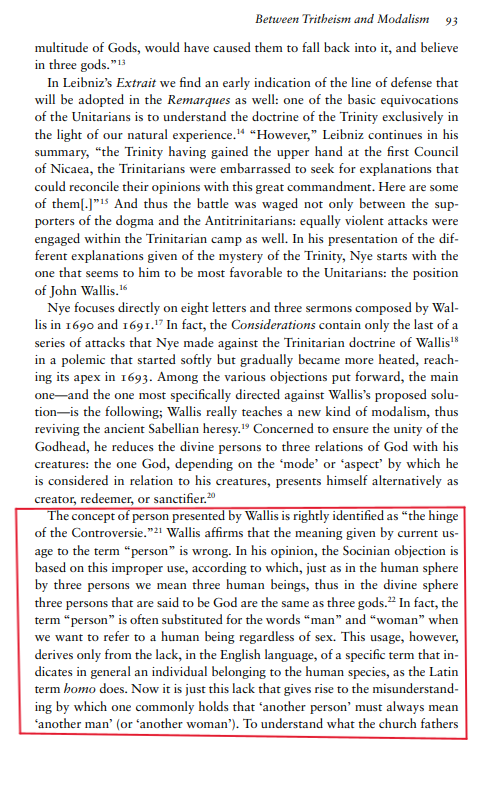
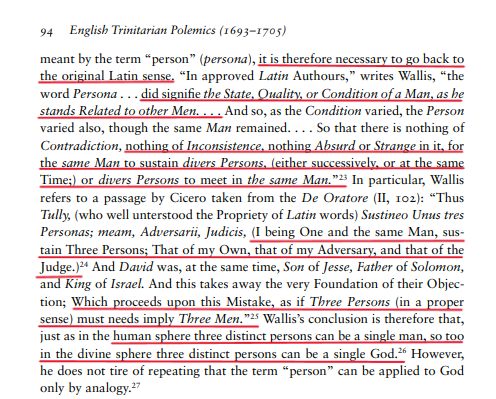
The concept of “mission” (missio ad extra) according to the teaching of St Thomas (S.T., I 43, 1), comprises two elements:
a) a relation between the one sent and the sender as terminus a quo (The one sent stands in a relation of dependence to the sender, in the Divine Persons, on account of their identity of essence, it can be a dependence according to origin only;
b) A relation between the one sent and the object of the mission (terminus ad quem).
The object of the mission is the presence of the One sent at a definite place. In the sending of a Divine Person, in view of the substantial omnipresence of God in the created world, there is a question only of a new kind of presence. Thus the concept of sending implies not only the eternal procession, but also a new kind of presence in the created world: mission included processionem aeternam et aliquid addit, sc. temporalem effectum (S.T., I 43, 2 ad 3). The temporal missions, therefore, reflect the “notions” of the Divine Persons: The Father sends only, but is not sent; the Son is sent and sends. The Holy Ghost is sent only, but does not send.“Hic igitur Spiritus Sanctus missus ab utrisque sicut Filius a Patre creditur”
“We believe that the Holy Ghost is sent from both [the Father and the Son] as the Son is sent from the Father.”
“The Holy Spirit, the Paraclete and the compassionator by whom is perfected all that was, will be and is; the Father, the Mind, the Son, the Word, the Spirit, the Voice; three Names, one will, one power.” Ed. (Lamy, St. Ephraem, Hymni et Sermones, iii, 242 ff.)
“The faithful adore Father, Son and Holy Spirit, one Godhead; God the Father, God the Son, God the Holy Spirit, one nature in three properties, understanding, perfect, subsisting of themselves, distinct indeed in number, not distinct in Godhead.” (P.G., xxxvi, 235.)
first, relative:
1. referred to another in some way; ordered to, connected with, dependent upon, limited by another in some way.
2. considered in its relation to something else rather than absolutely in itself.
second, relative opposition: the difference between the two correlative terms; as between cause (or principle) and effect (or principled) or sign and signified.
When someone speaks of a relation of opposition, they’re referring to a relation which signifies a real relation in which there is a distinction between correlatives.
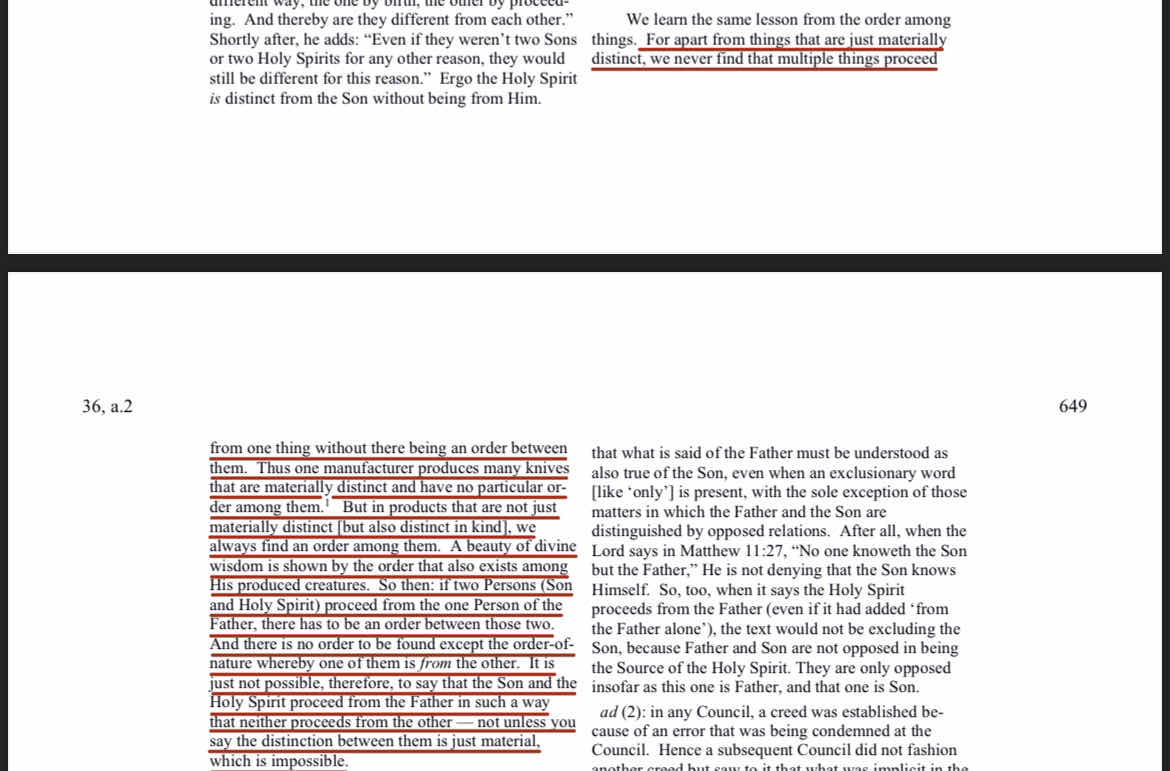
Cajetan on the nature of relative opposition in the Trinity:
 St Thomas Aquinas, concerning the same:
"The attributing of anything to another involves the attribution likewise of whatever is contained in it. So when man is attributed to anyone, a rational nature is likewise attributed to him. The idea of relation, however, necessarily means regard of one to another, according as one is relatively opposed to another. So as in God there is a real relation (A. 1), there must also be a real opposition. The very nature of relative opposition includes distinction. Hence, there must be real distinction in God, not, indeed, according to that which is absolute—namely, essence, wherein there is supreme unity and simplicity—but according to that which is relative. [. . .] Although relations, properly speaking, do not arise or proceed from each other, nevertheless they are considered as opposed according to the procession of one from another."
How are paternity and filiation distinguished?
In the case of paternity and filiation, we know that there is a real relation and that these two terms need the other to explain themselves. In the Trinity, we know that these arise from relations of origin—which are necessarily between two distinct things. And these relations of opposition are real relations; hence there is a distinction.
But when something proceeds from a principle of the same nature, then both the one proceeding and the source of procession, agree in the same order; and then they have real relations to each other. Therefore as the divine processions are in the identity of the same nature, as above explained (Q. 27, AA. 2, 4), these relations, according to the divine processions, are necessarily real relations.